The smartest brain in community banking is still learning.
The dashboard was never the product. The brain is.
The people who use it design it. They just don't know it yet.
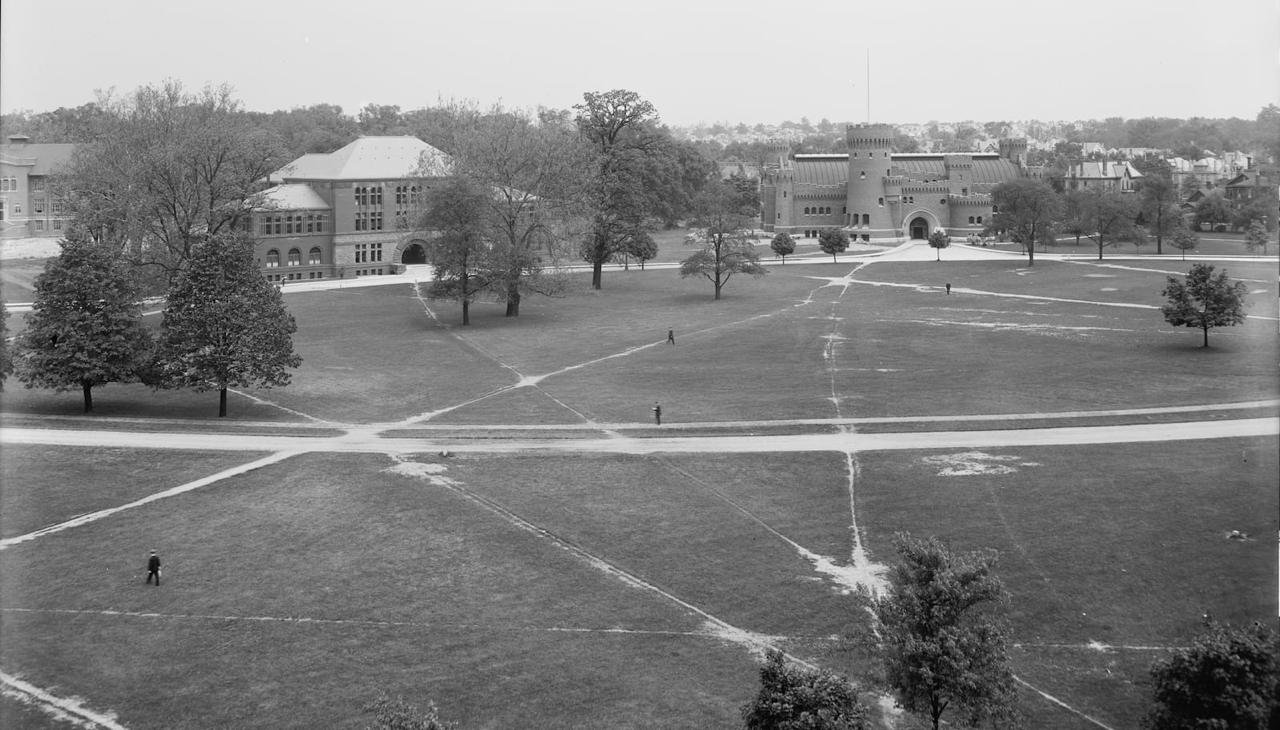
When Michigan State stopped guessing where to pour its sidewalks, it left the campus unpaved and let students walk. Within a season, the shortcuts they actually took wore visible trails into the grass. Then the planners paved exactly those lines. The students designed the campus without ever being asked. The planners were just smart enough to read the ground.
Software is usually built the other way: someone guesses the paths, pours the concrete, and tells people where to walk. Observatory is built to watch the grass. Every question your team asks, every report they keep pulling, every move they make twice, wears a path. Our job is not to guess where you want to go. It is to be smart enough to see where you are already walking, and pave it.
The memory that lets it remember your questions is the same memory that lets it read the paths you wear.
One brain becomes a team.
Observatory today is one intelligence you talk to. The architecture underneath is already agentic: when it researches an anomaly, it plans, searches, reads, and reports back on its own. That pattern will grow.
Where this goes is a restructure from one generalist into a coordinated team of specialists. An agent that watches deposits. An agent that preps exam materials. An agent that tracks your market and your competitors. Each narrow, each accountable, all sharing one memory and one set of guardrails: read-only access, cert-level isolation, and a full record of what was done and why.
The banker's experience should not get more complicated as this happens. It should get quieter. More work finishing in the background, fewer tabs open in the foreground.
You will not manage the agents. You will manage the outcomes.
A business shape for the AI era.
Prototyper
Chases brand-new ideas and expects most of them to die. Finds what is newly possible before anyone asks for it.
Builder
Turns the surviving prototype into production-grade product and infrastructure that a bank can trust.
Sweeper
Simplifies, cleans, and unships. Cuts the clutter so the system stays fast and legible as it grows.
Grower
Iterates a built product toward the people who need it, tightening the fit between what it does and what a banker actually wants.
Maintainer
Owns a mature system and keeps it secure, reliable, and boring in the best sense as it scales.
Every other tool waits for you. This one comes to you.
Every banking tool ever built asks the same thing: log in, click around, find your answer, leave. A destination you have to remember to visit.
Observatory runs the other direction. A morning brief in your inbox: here is what changed overnight, here is what deserves ten minutes. A flag in your task list, not another login. And through MCP, the open protocol it already speaks, its intelligence plugs into the tools your bank already runs, so the insight shows up inside the work instead of beside it.
Most software brags about time spent inside it. We want the opposite. The most valuable minutes Observatory gives you should be the ones you never spend in it.
Two directions the same engine can go.
The same engine, pointed at your customers.
Observatory makes a bank hard to leave because the intelligence compounds. Point that same engine one layer down and a bank can do the same thing for its own account holders. Not a budgeting app that gets deleted in February. A financial memory that answers the question people are worst at and lean on most: what happened last time.
It gets stickier every month, the same way Observatory does. Each thing the customer confirms (this recurring charge is the braces, that March spike is quarterly taxes) becomes a fact that sharpens the next answer. Year two it knows her seasons. Year three it predicts them. Switch banks and you do not lose an app, you lose years of being understood.
With consent, each confirmation feeds the bank's own Observatory and, anonymized, rolls up to DCI as a live read on Main Street. Nothing individual ever leaves the bank.
Big banks have your data. Your bank remembers you.
Maria runs a small catering business out of a town of 2,000 and banks where her parents did. Late March, a quiet panel appears in her app: "Last spring your supply costs jumped 40 percent when wedding season started. You floated it on your card and paid 210 dollars in interest. Want to set aside a cushion this year, or talk to Dana about a small seasonal line?" It remembered her April. Dana is a real person at the branch. And it offered the option that costs the bank money first, which is exactly why the advice is believed.